
U.S. Military Action in Venezuela: A Turning Point in Foreign Affairs
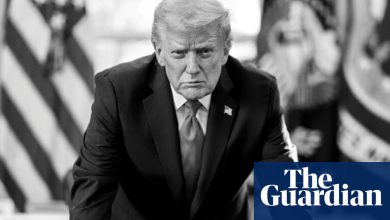
President Donald Trump announced that the United States will “run” Venezuela following the capture of President Nicolás Maduro and his wife, Cilia Flores, during a significant military operation aimed at reshaping the political landscape of the nation. Here’s what you need to know about this developing story:
Details of the Military Operation
During a press conference regarding the assault on Venezuela, Trump stated, “We’re going to run the country [Venezuela] until such time as we can do a safe, proper and judicious transition.” Specifics about the operation have yet to be disclosed.
A plane carrying Maduro and Flores landed in New York on Saturday evening, with expectations for them to appear in a federal court in Manhattan, potentially as early as Monday.
Trump emphasized that the U.S. would be “very strongly involved” in Venezuela’s oil industry post-operation, proudly declaring, “We have the greatest oil companies in the world, the biggest, the greatest, and we’re going to be very much involved in it.”
Reactions and Statements
In a statement on his Truth Social platform, Trump shared a photograph of Maduro appearing to be in handcuffs, wearing sunglasses and headphones. The image has stirred significant media attention.
The United Nations Security Council is set to hold an emergency meeting to discuss the events. Secretary of State Marco Rubio highlighted Maduro’s indictment for drug trafficking in the U.S., while Vice President JD Vance described the operation as “truly impressive,” reiterating that drug trafficking must cease.
Conversely, the Venezuelan government has called for citizens to resist the U.S. military intervention, branding it an act of “imperialist aggression” that threatens stability across Latin America.
International Repercussions
Global leaders have responded variably. The British Prime Minister, Keir Starmer, asserted that the U.K. was “not involved in any way in this operation,” emphasizing the need to uphold international law. France echoed similar sentiments, calling the U.S. action contrary to international principles.
Russia has demanded urgent clarification regarding Maduro’s capture, while Venezuela’s allies—including Cuba and Iran—have denounced the U.S. strikes as violations of sovereignty. In contrast, Argentina’s president hailed Maduro’s removal as a step toward “freedom.”
Domestic Impact and Public Opinion
Back in the U.S., public opinion is divided regarding the military action in Venezuela. The administration’s strategy raises questions about the implications for democracy in America and how foreign policy influences domestic politics. With election reform discussions taking center stage, many Americans are assessing the balance between national interests and international responsibilities.