
U.S. Congressmen Request Judge to Appoint Official for Release of All Epstein Files

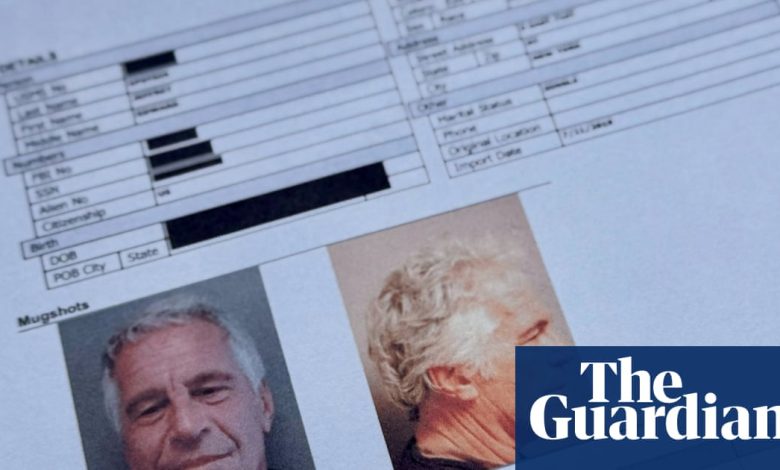
Lawmakers Demand Transparency on Epstein Files from Justice Department
Two members of the U.S. House of Representatives are urging a federal judge to appoint a special master to compel the Justice Department (DOJ) to release all files related to Jeffrey Epstein, the disgraced financier and convicted sex offender.
On Thursday, Representative Ro Khanna (D-CA) and Representative Thomas Massie (R-KY) submitted a request to U.S. District Judge Paul Engelmayer for the full disclosure of Epstein-related files, as mandated by the Epstein Files Transparency Act. The lawmakers criticized the DOJ for failing to meet the December 19 deadline for document release, claiming this lack of compliance not only violates the Act but also exacerbates the trauma experienced by Epstein’s survivors.
In their letter, Khanna and Massie stated, “The conduct by the DOJ is not only a flagrant violation of the mandatory disclosure obligations under the Epstein Files Transparency Act, but as this Court has recognized in its previous rulings, the behavior by the DOJ has caused serious trauma to survivors.”
The representatives expressed “urgent and grave concerns” regarding the DOJ’s failure to comply with the Act and the court’s orders. They raised doubts about the validity of the DOJ’s recent claims that only 12,285 documents have been released, which represents less than 1% of the total files. Khanna and Massie pointed out that approximately 2 million additional documents are still under review.
“Because these figures are self-reported and inconsistent with prior representations, there is reasonable suspicion that the DOJ has overstated the scope of responsive materials,” they noted, suggesting that this portrays compliance as unmanageable, effectively delaying necessary transparency.
Furthermore, the representatives highlighted the DOJ’s failure to submit required reports to the House and Senate Judiciary Committees within 15 days past the deadline. These reports should include details about redactions and records withheld from release. “To date, no such report has been provided. Without it, there is no authoritative accounting of what records exist, what has been withheld, or why, making effective oversight and judicial review far more difficult,” they stated.
As part of their appeal, Khanna and Massie requested Judge Engelmayer to authorize an independent monitor to report on the status of document production and to identify any improper redactions or conduct. “Absent an independent process, as outlined above, we do not believe the DOJ will produce the records that are required by the Act,” they asserted.