‘Trump’s Inconsistency with Christian Principles’: Exploring the Rise of White Clergy Candidates in the Democratic Party

The Rise of White Clergy in Democratic Politics: A Shift in Religious Alignment
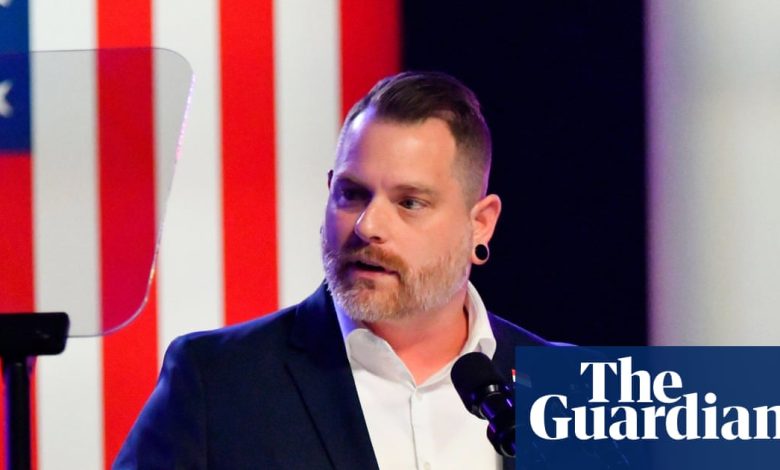
From farm roots in Indiana to a congressional bid—Justin Douglas exemplifies a new wave of white clergy engaging in political strategy as Democrats. His journey reflects broader trends in election reform and the changing dynamics within the faith community in America.
Changing Political Landscapes
Justin Douglas grew up on a farm in Indiana, the eldest of five children born to a factory worker. He studied at Liberty University, founded by conservative televangelist Jerry Falwell, and remembers wearing a T-shirt opposing Democratic presidential candidate John Kerry. Two decades later, he is running for the U.S. Congress as a Democrat.
Douglas is one of approximately 30 white Christian clergy members—pastors, seminary students, and other faith leaders—emerging as potential Democratic candidates in upcoming midterm elections. While emphasizing the importance of the separation of church and state, many feel their faith calls them to participate actively in civic engagement.
A Shift in Demographics
This trend represents a departure from traditional racial divisions in American politics. Historically, Black pastors have leaned Democratic while their white counterparts have predominantly aligned with the Republican Party, a testament to the influence of the religious right.
Based in Harrisburg, Pennsylvania, Douglas represents a new generation of the Christian left, aiming to reshape the narrative that the Democratic Party is solely for college-educated urbanites. He seeks to ensure that the party resonates with white working-class churchgoers.
“Democrats have repeatedly sold out working-class people, appearing as liberal elitists who look down on those who view church as central to their lives,” Douglas stated.
Douglas argues that the portrayal of Republicans as purely pro-faith is misleading, pointing to instances where faith has been politicized, such as the administration’s use of the Lord’s Prayer in a controversial video.
Historical Context
For decades, many white Christians did not strictly adhere to party lines, often voting Democratic. However, as the Democratic Party embraced civil rights, feminism, and secular liberalism in the late 1960s, many conservative Christians felt increasingly alienated. This disconnect deepened when the IRS revoked tax-exempt status from private schools that discriminated based on race.
Figures like Jerry Falwell rallied against what they perceived as federal overreach, using abortion as a pivotal issue to galvanize moral conservatives. This realignment solidified the evangelical demographic’s loyalty to the Republican Party, especially under Donald Trump, who galvanized many through his uncompromising rhetoric against a liberal culture.
A New Wave of Democratic Candidates
Trump’s elections triggered a new willingness among white clergy to engage in partisan politics. Figures like James Talarico, a Texas state representative, and Sarah Trone Garriott, an Evangelical Lutheran pastor in Iowa, exemplify this trend. They utilize scripture to address poverty and justice, criticizing the Republican Party’s alignment with corporate interests and Christian nationalism.
Robb Ryerse, a former Republican now challenging incumbent Senator Steve Womack in Arkansas, echoes these sentiments, stating, “Donald Trump has galvanized many evangelical leaders seeking political power, leading to a cultural war that is detrimental to both the church and the country.”
The Call for Action
The group “Vote Common Good” was established post-Trump election to address the political dislocation felt among many religious individuals. By connecting faith voters with Democratic candidates, they aim to nurture civic engagement and public opinion that aligns with social justice and equity.
As Douglas prepares to run against Republican incumbent Scott Perry in Pennsylvania’s 10th district, he reflects on the sacrifices made for standing with marginalized communities, emphasizing that doing what is right is essential, regardless of the cost.