Republican Concerns Over Hemp Ban Jeopardize Bill to End Government Shutdown in the House of Representatives

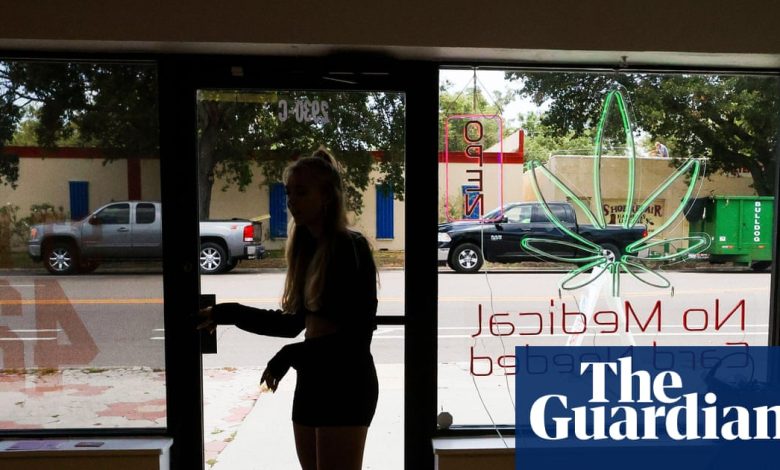
Hemp Provision Sparks Republican Dissent in Federal Spending Bill
A last-minute addition to the federal spending bill that imposes heavy restrictions on hemp-derived products like CBD and THC beverages could result in some Republican lawmakers opposing the legislation. If passed, this bill may end the ongoing government shutdown as early as Wednesday.
Kentucky’s Hemp Industry Faces Uncertain Future
Kentucky stands as one of the top hemp producers in the United States, and Republicans in the state generally support the hemp sector. Jonathan Miller, a former Kentucky state treasurer and an advocate for the hemp industry, emphasized, “Kentucky is really ground zero for the rebirth of hemp,” a sector that has blossomed since the 2018 Farm Bill allowed a wider array of legal products.
Senator Paul Breaks Party Lines
On Monday night, Senator Rand Paul diverged from party lines by voting against the spending bill due to the controversial hemp provision—disclosed just before the vote. Paul had attempted to have the provision removed but was unsuccessful.
Miller noted that discussions regarding restrictions on hemp have been ongoing in Congress for months. “Initially, it was part of the farm bill, and later it appeared in last year’s spending bill,” he stated. Although Paul previously managed to block this provision, it resurfaced in the current appropriations bill that is designed to address funding across various sectors, including agriculture.
Impact of the New Provision
The latest version of the provision criminalizes any hemp product containing over 0.4 milligrams of total THC per container, which Miller pointed out is effectively an untenable limit, as 95% of hemp products exceed that threshold. The 2018 Farm Bill had only limited hemp based on a delta-9 THC concentration of less than 0.3%. This new measure would extend the prohibition to all forms of THC, including delta-8 THC and THCA, while also criminalizing non-intoxicating CBD products that contain trace amounts of THC.
House Vote on the Horizon
The bill is set for a House vote as early as Wednesday and requires a majority of 218 votes to pass. Among the 219 Republican representatives, Kentucky lawmakers James Comer, Thomas Massie, and Andy Barr have all voiced opposition to the ban. Massie condemned the tactics being employed to push this provision into law.
Industry Division and Consumer Concerns
The alcohol industry is divided over this issue, with alcohol distributors advocating for regulation rather than an outright ban. Conversely, the American Distilled Spirits Alliance has expressed support for the measure. Miller raised the concern that while distributors may seek to profit from THC beverages, some alcohol manufacturers hold hemp responsible for declining alcohol consumption among U.S. adults.
Industry leaders worry that a ban would shift the market towards unregulated manufacturers. Jammie Treadwell, CEO of Treadwell Farms, stressed, “If sweeping restrictions move forward, it won’t be the bad actors who disappear. Instead, we need thoughtful, science-based regulation.”
The Path Ahead
Evan Eneman, CEO of Iconic Tonics, voiced that the sudden shift surrounding the provision is both “destabilizing and unnecessary.” He emphasized that policy decisions made without open hearings risk causing unintended harm and could foster the unregulated market that lawmakers aim to eliminate.
Despite the concerns, Miller noted a silver lining: the bill would not take effect until one year after its passage, providing time to advocate for a more balanced regulatory framework for hemp products. He remains optimistic about finding a resolution before implementation.
Cameron Clarke, CEO of Kanha—an edibles manufacturer—concluded that ultimately, politicians will likely have to respond to consumer demand for hemp products. “Politicians don’t typically lead consumer preferences; they follow consumer demands,” he stated.