Nicolás Maduro: From Bus Driver to Chávez’s Successor to Detainee in the U.S.

Nicolás Maduro: A Turbulent Legacy in Venezuelan Politics
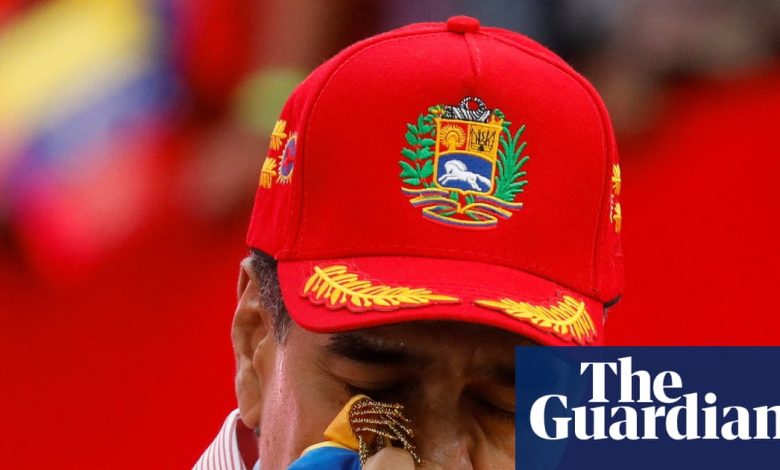
Nicolás Maduro, a former bus driver and union activist, governed Venezuela for 13 years and eight months before being ousted on Saturday by U.S. special forces and taken out of the country. Over the years, Maduro accused the U.S. government of undermining the socialist revolution initiated by his predecessor, Hugo Chávez, back in 1999. Now in the custody of U.S. authorities, he faces an indictment for narcotics charges and a potentially lengthy prison sentence.
Maduro’s rule significantly impacted Venezuela’s economy, driving millions to flee the country in search of better opportunities as they escaped an increasingly corrupt and repressive government. Born on November 23, 1962, Maduro began his political journey as the president of the student union at José Ávalos High School in El Valle, a working-class neighborhood in Caracas.

Though he never graduated, his political engagements began early. In 1986, he traveled to Cuba for formal education and returned to work as a bus driver, eventually becoming a union leader, following in his father’s footsteps, and aligning closely with Chávez. In the mid-1990s, he joined Chávez’s political movement after receiving a presidential pardon following a failed coup. Following Chávez’s ascension in 1998, Maduro rose quickly through the ranks of Venezuela’s ruling party, moving from the National Assembly to foreign minister and eventually vice president.
After Chávez’s death in 2013, Maduro, chosen as his successor, was often ridiculed for his working-class background. Nonetheless, he narrowly won the presidential election that year, beginning his first term. However, political dissent quickly stirred, led by figures like María Corina Machado, eventually escalating to nationwide protests met with violent reprisals from security forces, resulting in over 40 deaths.
In 2015, the opposition won control of the National Assembly, prompting Maduro to counteract by creating a pro-government Constituent Assembly in 2017, further spiraling the nation into crisis. Responsibility for human rights violations led to an investigation by the International Criminal Court, with reports of over 100 fatalities and thousands injured in the ensuing protests.

By 2018, with the economy in freefall due to hyperinflation and dwindling oil production, Maduro faced an assassination attempt while speaking during a military parade. In a presidential election marked by controversy, many countries refused to recognize his victory, citing significant barriers to opposition participation, including imprisonments and forced exiles of dissenting politicians.
As Washington imposed economic sanctions to instigate government change, Maduro’s support base, fortified by military and paramilitary factions, remained resilient. The growing tensions hinted at a possible escalation of conflict between the U.S. and Venezuelan authorities.
Under increasing pressure, Maduro implemented some economic reforms, hinting at hopes for a democratic electoral process by 2024; however, his government subsequently barred Machado from running and intensified crackdowns on opposition. Following the 2024 election, Maduro was declared the winner despite significant evidence of his projected defeat, leading to further protests that were met with government force.

In January 2025, Donald Trump’s return to the presidency in the U.S. significantly escalated tensions, with military forces deployed in the Caribbean region. Maduro faced severe accusations, particularly concerning active narco-terrorism solutions initiated by the U.S., resulting in deadly confrontations.