Is the Supreme Court Prepared to Confront Trump Over Attacks on the Federal Reserve?

Trump’s Challenge to the Federal Reserve: A Test of Power and Independence
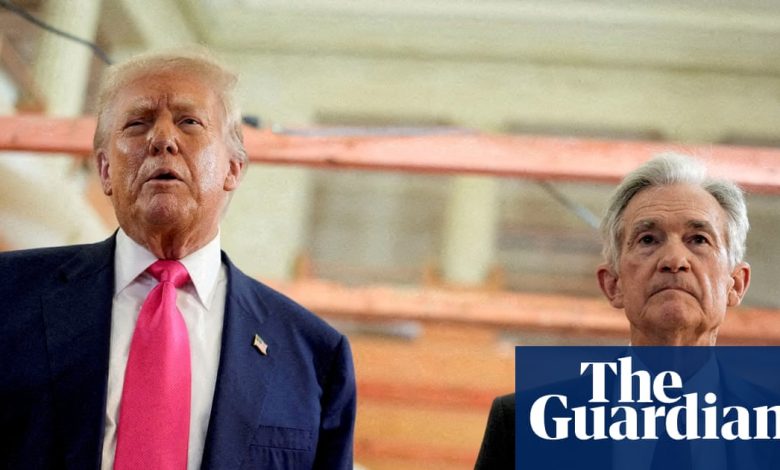
Former President Donald Trump has employed his familiar tactics in his attempt to persuade the U.S. Federal Reserve to lower interest rates: aggressive bullying followed by threats of dismissal. In an unprecedented attack on the central bank, Trump labeled Fed Chair Jerome Powell as “stupid” and hinted at possible termination for not enacting rate cuts swiftly enough. Recently, the Justice Department initiated a criminal investigation into Powell, triggered by testimony regarding renovations at the Fed’s headquarters. Nonetheless, the Fed has maintained its ground.
Strategically, Trump’s approach to the Federal Reserve mirrors his efforts to reshape the broader federal government. He has learned that persistent pressure can yield results, a strategy that has often proven effective. However, with the Fed, he appears to have encountered formidable resistance, especially in light of recent Supreme Court arguments where justices expressed skepticism regarding his firing of Fed Governor Lisa Cook.
While this skepticism may suggest a check on executive authority, legal analysts caution that a ruling against Trump may not significantly limit his power. Instead, it seems the Court is establishing a unique exemption for the Fed at a time when the independence of other government agencies remains precarious. “The consequences could be quite harmful,” stated Michael Dorf, a law professor at Cornell University, highlighting concern over the president’s desire to centralize power and appoint loyalists lacking necessary expertise.
Trump removed Cook in August, alleging mortgage fraud after she listed multiple properties as her primary residence to secure a better mortgage rate. These claims were first shared on social media, culminating in Cook’s dismissal shortly thereafter. Following a lower federal court’s temporary reinstatement of Cook, the White House escalated the dispute to the Supreme Court.
The hasty nature of Cook’s firing—lacking formal investigation or hearing—raises numerous legal questions that the Court may soon address: Were Cook’s due-process rights violated? Does the alleged fraud, which her attorneys contend was an “inadvertent mistake,” warrant her termination? Should a lower court have resolved these issues before the Supreme Court’s involvement?
Amid these deliberations, a critical question looms: how much authority will the Supreme Court permit a president to wield over the Federal Reserve? Legal experts are watching closely, as Cook’s dismissal marks just one instance of Trump’s executive power being tested. Notably, last year, Trump dismissed independent officials, including Democratic appointees to the National Labor Relations Board (NLRB) and the Federal Trade Commission (FTC).
The Court upheld Trump’s firings, and experts anticipate a pivotal ruling regarding the FTC that could enhance executive power for the foreseeable future. Many within the conservative legal movement advocate for the “unitary executive” theory, positing that the president ought to be able to dismiss any executive branch officials at will, thereby positioning the will of voters as the sole check on presidential authority.
The Court’s current conservative majority may seize this moment to fortify presidential authority. Analysts suggest that the pending decision on Slaughter’s FTC firing could lead the Court to narrow or possibly overturn the precedent set by Humphrey’s Executor v. United States, which previously constrained presidential dismissal powers over independent agency officials.
Interestingly, while there seems to be a push for greater presidential control in general, an exception appears to be forming regarding the Federal Reserve. The Supreme Court referenced the central bank in the context of the NLRB dismissals, suggesting they might resist attempts by Trump to terminate an official within the Fed. “The Federal Reserve is a uniquely structured, quasi-private entity steeped in the historical context of America’s early banking system,” the Court noted, hinting at the potential for judicial pushback against political intrusion in this case.
Legal scholars argue that the structural autonomy of the Fed is legally comparable to that of other independent agencies. “What is particularly striking about the oral arguments is the Court’s newfound interest in enforcing the statutes that protect agency independence, especially when juxtaposed against its previous leniency toward Trump’s executive actions,” remarked Lev Menand, a professor at Columbia Law School.
The Court’s concerns extend beyond legal principles; economic implications weigh heavily in their considerations. Justice Amy Coney Barrett highlighted economist warnings that Cook’s potential dismissal could prompt a recession, while Justice Brett Kavanaugh questioned the real-world ramifications of undermining Fed independence. “If this sets a precedent, it could invite retaliatory actions against all presidential appointees come January 20, 2029, under a new administration,” he cautioned.
The Federal Reserve’s authority largely stems from its ability to influence interest rates, a powerful tool for economic management. Although lower interest rates can temporarily bolster the economy, they can also ignite inflationary pressures. A delicate balance is required to ensure the long-term stability of the economy, a responsibility that transcends the political fortunes of current leaders. Disrupting this independence could lead to serious economic repercussions, including potential recessions.
As the case surrounding Cook progresses, some legal experts argue that a significant clash of powers is unfolding. “An unstoppable force has met an immovable object,” Menand stated, emphasizing that while the Court may sanction reduced independence for agencies like the FTC, the dynamic with the Federal Reserve remains complex and distinct. Major business interests oppose any diminishment of the Fed’s authority, wary of political meddling in its operations.
The Supreme Court has shown a willingness to be accommodating to Trump’s use of executive power, allowing continuity in aggressive immigration policies and blocking lower courts from issuing nationwide injunctions against his administration. “I worry that by ruling against Trump in high-profile cases like this, the Court might receive undue credit for being impartial while still enabling his broader authoritarian tendencies,” Dorf cautioned.