
Greenland Crisis: Europe Faces Trump’s Demands on Sovereignty
The ongoing dispute over Greenland might serve as a pivotal moment for Europe, challenging its relationship with the Trump administration and raising significant questions about the future of NATO.
Tensions Rise Over Greenland’s Status
European leaders have been accommodating President Trump’s demands for nearly a year, as he pressures NATO allies to increase defense spending to 5% of their GDP. The potential for the U.S. to withdraw support from Ukraine as part of a peace process that seems to favor Russia has only heightened anxiety among European nations. Furthermore, the muted response to U.S. actions abroad, including the controversial capture of Venezuela’s Nicolás Maduro, raises eyebrows among European diplomats.
This subservience has often been evident in public settings, where various leaders have positioned themselves as “Trump whisperers.” Notably, NATO Secretary General Mark Rutte referred to Trump as “daddy” during a summit last June.
However, Trump’s persistent and increasingly aggressive requests for Denmark to cede or sell the semi-autonomous territory of Greenland have sparked one of the most serious crises in the history of transatlantic relations. This situation may compel Europe to firmly establish its boundaries.
A Stand on Sovereignty
“The president’s ambition is on the table,” stated Danish Foreign Minister Lars Løkke Rasmussen after discussions with U.S. officials. “Of course, we have our red lines. In 2026, we may engage in trade, but we do not trade people.”
After an hour-long meeting with U.S. Vice President JD Vance and Secretary of State Marco Rubio, Rasmussen and Greenland’s Foreign Minister Vivian Motzfeldt appeared visibly distressed outside the Eisenhower Executive Office Building in Washington, D.C.
Kristine Berzina, a senior fellow at the German Marshall Fund, noted, “When it comes to Greenland, the Europeans have found a red line that they are determined to uphold. The situation is different because it touches on sovereignty and whether Europe can assert its rights to protect its own territory.”
Diplomatic Disadvantages and Emotional Strain
Latvia’s former Prime Minister Krišjanis Kariņš emphasized that Europe is at a “diplomatic disadvantage” due to its security dependence on the United States. “Europe is not in a strong position to object strongly, as any dispute could trigger a hard response from the U.S. Ultimately, Europe still requires U.S. support,” he remarked.
The emotional strain on officials from Denmark and Greenland has been substantial. Motzfeldt expressed her distress during negotiations, highlighting Denmark’s longstanding role as a reliable ally to the U.S. “It feels akin to being slapped in the face by a best friend,” she noted, emphasizing the lack of provocation for Trump’s actions.
Trump’s Ongoing Interest in Greenland
Trump’s interest in acquiring Greenland has intensified since his friend Ronald Lauder suggested the idea in 2019. While the White House claims national security is the primary concern, Trump himself admitted that personal ambition plays a significant role. He recently stated that owning Greenland is “psychologically necessary for success.” Trump even threatened tariffs on countries that oppose his ambitions regarding Greenland.
Some members of his administration see this as an opportunity to challenge European allies. Diplomatic insiders have noted Vance’s involvement has heightened tensions and suggested his position could complicate discussions. “He is clearly enjoying this,” said one diplomat. “His presence makes talks more emotional.”
Europe’s Response: Strengthening Military Presence
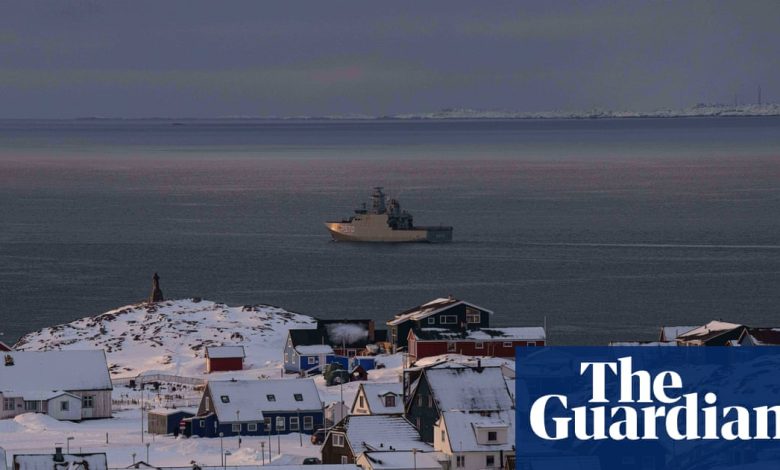
In response, Europe is working to undermine the Trump administration’s claims that Greenland is underprotected from potential threats from Russia or China. A small French military contingent arrived on the island, part of a limited deployment that also includes troops from Germany, Sweden, Norway, Finland, the Netherlands, and the UK.
Denmark’s Prime Minister Mette Frederiksen emphasized that the defense and protection of Greenland is a collective concern for the entire NATO alliance. Following a scheduled meeting with Rutte, Rasmussen and Motzfeldt aim to solidify European unity on this issue.
Future Actions and Diplomatic Engagement
Kariņš suggested that by bolstering Greenland’s military capabilities, European leaders could negate the Trump administration’s rationale for annexation. Strengthening defense would eliminate one of the key arguments for U.S. intervention.
Beyond military enhancements, several proposals have emerged for how the EU can safeguard Greenland’s sovereignty. These range from organizing an international summit on Arctic security to more radical options such as halting the European Parliament’s vote on the EU-U.S. trade deal, which many see as a reward for Trump’s actions.
Despite the complexities, the EU continues to engage diplomatically, with European Commission President Ursula von der Leyen reaffirming the U.S. as an ally while highlighting ongoing efforts to support Greenland. “Greenland can count on us, politically, economically, and financially,” she asserted.