Minnesota Files Lawsuit Against Trump Administration to Halt Surge of ICE Agents in the State

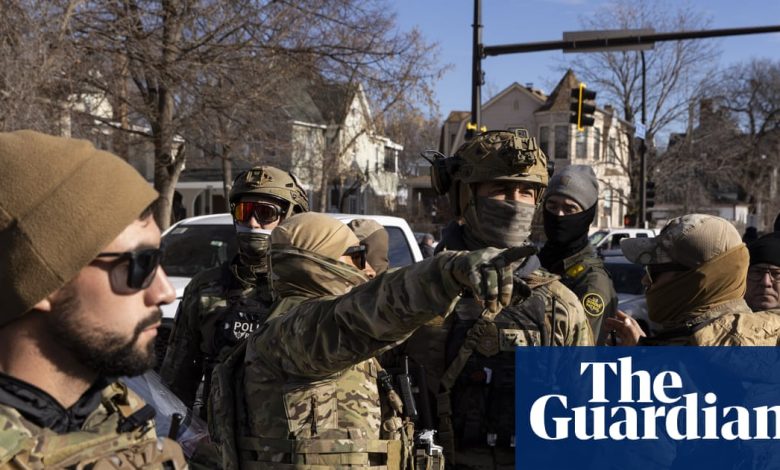
Minnesota Attorney General Sues Federal Government Over Increased ICE Presence
In a bold move reflecting a growing concern over federal law enforcement practices, Minnesota Attorney General Keith Ellison filed a lawsuit on Monday against the Department of Homeland Security (DHS), aiming to curtail the surge of Immigration and Customs Enforcement (ICE) agents in the state.
Context of the Lawsuit
This legal action follows a troubling incident in which an ICE agent fatally shot local resident Renee Nicole Good while she was inside her vehicle. The event sparked protests not only in Minnesota but across the nation, highlighting public outrage against aggressive federal tactics.
Accusations Against DHS
In the lawsuit, Ellison accused the DHS of employing excessive and lethal force, making unwarranted arrests, and intruding into places of worship and schools. He emphasized the need for judicial intervention to halt what he described as an “invasion” of Minnesota by numerous armed federal agents.
“This deployment has caused significant harm to our state. It undermines our safety and well-being,” Ellison stated during a press conference, adding that local businesses and schools have suffered due to the increased federal presence.
Legal Actions and Community Reactions
Assistant Attorney General Brian Carter announced that a motion for a temporary restraining order would be filed in conjunction with the lawsuit. Ellison criticized the training of federal agents, suggesting they lack the necessary skills compared to local law enforcement who have been forced to respond to numerous incidents involving ICE.
“DHS agents engage in unconstitutional arrests and excessive force,” Ellison said, describing alarming encounters where federal agents have demanded access to restaurants and secure areas without presenting warrants.
Press Freedom and Civic Engagement
During the press conference, PBS Frontline’s AC Thompson raised concerns about the use of crowd control measures against media personnel. Ellison urged those affected to document their experiences, underlining the vital role of the press in protecting First Amendment rights, especially in challenging times.
Political Context
Ellison pointed out that Minnesota’s immigrant population stands at just 1.5 percent, significantly lower than the national average. He suggested that the heightened scrutiny from the Trump administration toward Minnesota is driven by political motives. Additionally, the state’s Somali immigrant community has faced increased attacks from both the administration and right-wing media.
“It seems that Donald Trump does not hold our state in high regard,” Ellison remarked, hinting at the political undercurrents influencing federal policy.
Local Leadership Voices Concerns
The presence of thousands of federal agents has strained the resources of local law enforcement, as acknowledged by Minneapolis Mayor Jacob Frey. He criticized the federal government’s justification for the increased presence, stating, “If safety were the primary concern, different approaches would be employed.”
Saint Paul Mayor Kaohly Her, a Hmong-American immigrant, shared her personal experience of living in fear of detention. “I carry my passport and ID with me at all times, unsure of when I might be approached,” she said, emphasizing the impact of federal actions on everyday life.