Trump’s Dominance in Sports Reaches New Heights in 2025: A Preview of What’s to Come Next Year

The Political Playbook: Trump’s Strategy in Sports and Elections
Donald Trump, often touted as the hardest-working president, has claimed a significant amount of downtime while in office. With an ever-increasing presence in American sports, his engagements raise questions about the intersection of sports and politics in democracy in America. As we look toward 2026, Trump’s affinity for sports signals a strategy that aims to intertwine political campaigns with public enthusiasm for athletic events.
Trump’s Ascendancy in Sports
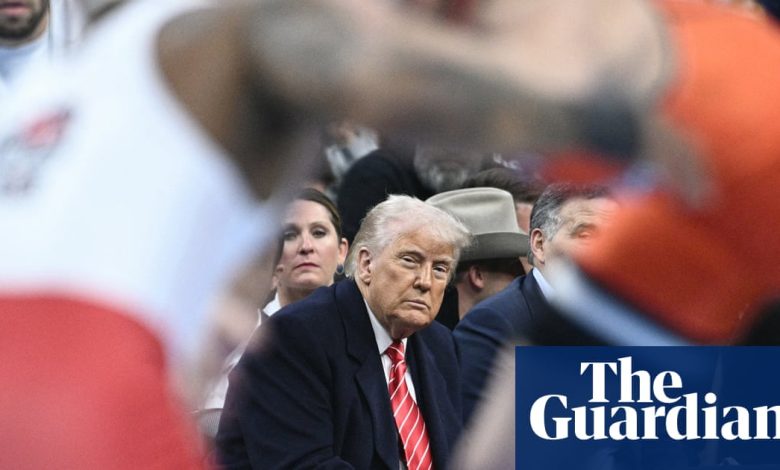
Trump’s foray into the sporting world began shortly after his second inauguration, making him the first sitting president to attend the Super Bowl. His presence at major events—from the Daytona 500 to UFC matches—has transformed these occasions into demonstrations of political relevance. As Trump appeared at the FIFA Club World Cup and various championship events, it became clear that his participation was more than mere leisure; these outings are strategic maneuvers designed to bolster his public image and campaign appeals.
A Coordinated Political Strategy
Trump’s growing association with sporting events resembles traditional political engagements like county fairs—carefully staged for media consumption. At these events, he draws large crowds to amplify his visibility and solidify his support base. By choosing venues that favor his image and control the narrative, he effectively leverages public opinion in his favor. Whether amid cheers at a NASCAR event or jeers from tennis patrons, his approach consolidates his narrative of strength and dominance.
Historical Context and Contemporary Relevance
Throughout history, strongmen have utilized sports as a means to project power and control public perception. From ancient Rome to the modern era, leaders have intertwined their legacies with athletic accolades to secure legitimacy. Trump’s current strategy reflects this tradition, using sports as a vehicle for political ambition and civic engagement, while simultaneously aligning himself with power brokers in the sports world.
Sports as a Cultural Battlefield
In recent campaigns, Trump has demonstrated how sports can act as cultural flashpoints. By elevating discussions on issues like transgender participation in women’s sports, he taps into broader anxieties and galvanizes his conservative base. This method of framing issues can influence voter turnout, proving effective in tightly contested elections.
Looking Ahead to 2026
As the United States prepares to host the Men’s World Cup in 2026, Trump aims to co-opt this global event to fulfill his desire for international validation. He has cultivated relationships within the world of soccer, positioning himself as a significant player on the world stage, further embedding sports into his political narrative.
Conclusion: The Role of Sports in Trump’s Political Landscape
The hyper-politicized nature of contemporary sports aligns perfectly with Trump’s needs as a political figure. Sporting events provide the crowds, media exposure, and narrative-building opportunities he thrives upon, enabling him to recast political rallies as spectacles of patriotism. As the 2026 events approach, Trump’s ability to leverage public enthusiasm for sports will reinforce his political strategy and civic engagement efforts in an increasingly competitive landscape.