Once Celebrated as Heroes, Afghans Fear Deportation Under Trump Administration

The Plight of Afghan Pilots: A Story of Desperation and Hope
As the situation in Afghanistan deteriorated in August 2021, many who had fought alongside U.S. forces faced uncertain futures. This is the story of Ali, a dedicated Afghan pilot now navigating life in the U.S. while longing for his family’s safety.
A Day of Reckoning
At 25, Ali was a pilot with the Afghan air force, following in his father’s footsteps. On a fateful day in August 2021, he arrived at the special mission wing 777 airbase in Kabul, sensing immediately that something was amiss. “I didn’t think it would reach Kabul,” he recalled in a recent phone interview from Boise, Idaho.
What “it” referred to was the Taliban’s rapid resurgence, which he once believed was unimaginable in the capital. With the U.S. embassy bustling and a significant American presence, Kabul felt stable. However, as he entered the base, the chaos was palpable. Pilots dashed between hangars and routines collapsed, replaced by a frantic urgency.
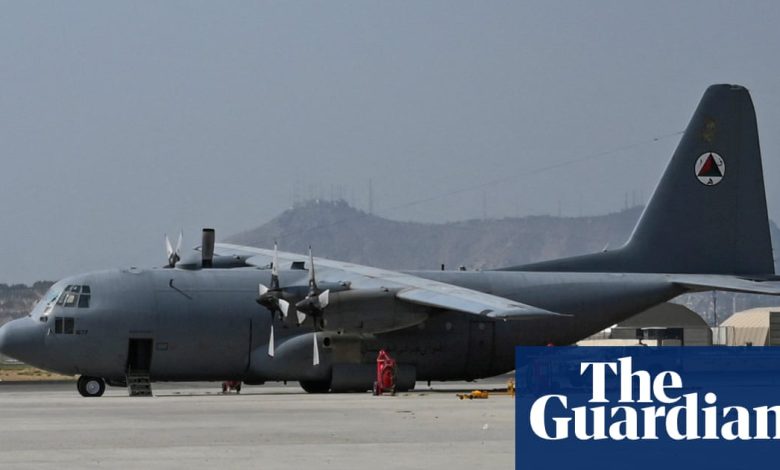
On August 15, 2021, the truth settled in: Kabul was falling. Ali’s superiors gave him a stark choice: board a U.S. Air Force C-17 evacuating civilians or fly his plane out of the country. Without hesitation, he chose to take to the skies.
Fighting for Democracy
Ali had been flying alongside American forces since he was 19, inspired by a vision of democracy in Afghanistan. As he faced the decision to leave, his thoughts raced to his family, urging them to reach the airport. Yet, witnessing the chaos on the runway filled him with dread. “I had 15 minutes to decide if I was leaving my family behind,” he recounted. “I couldn’t bring them into that chaos.” He boarded a Pilatus PC-12, adapted for intelligence and surveillance, determined to protect the aircraft funded by U.S. support, fearing its loss would arm the very enemy he had fought against.
Life in America
Now residing in Boise, Ali drives for Uber while attending flight school. His family managed to escape to a neighboring country, but his fiancée remains in Taliban-controlled Afghanistan. He sends financial support to both, striving to build a new life.
On January 3, 2025, Ali was granted asylum in the U.S., anticipating the arrival of his green card, which would allow him to work legally as a commercial pilot and petition for his family’s safety. His hopes for a future engagement ceremony with his fiancée, never realized last August, were now his guiding light.
A Dark Turn
However, his hopes took a sharp downturn in December when news broke of an Afghan man arrested in connection with a shooting incident involving national guard soldiers in Washington, D.C. The event sent shockwaves through the Afghan community, igniting fears of widespread backlash and intensified scrutiny regarding Afghan immigrants.
Spencer Sullivan, a former U.S. Army captain and co-author of an upcoming book detailing the experiences of an Afghan interpreter, expressed his concerns about the fallout from the shooting. “This is going to be used as a representation of tens of millions of Afghans… an excuse for those against immigration,” he warned.
Policy Shifts and Rhetoric
The Trump administration’s rapid response included halting asylum cases and visa issuances for Afghans, collectively freezing opportunities for those already in the U.S. This sudden policy shift raised alarm among Afghan communities and advocates, who condemned the actions as unjust and counterproductive.
Jennifer Patota from the International Refugee Assistance Project remarked that policies punishing entire nationalities due to one individual’s actions were detrimental. As fear spread, Afghans faced heightened risks during routine immigration appointments, with reports of detentions by ICE (Immigration and Customs Enforcement).
The Personal Toll
Ali’s acute fear of deportation looms large as rhetoric hardens and enforcement increases. “They’re going to see everybody the same,” he said, referring to perceptions of Afghans in the U.S. “If it were up to Trump, he would deport everyone who looks like me.”
The emotional impact is profound. He worries for his 13-year-old sister, fearing that the freedoms she currently enjoys will vanish as conditions worsen in Afghanistan. “When she turns 16, that freedom would be taken away,” he lamented.