Trump Signs Order Reclassifying Marijuana as a Less Dangerous Substance | Trump Administration

Trump Signs Executive Order to Reclassify Marijuana, Aims to Ease Research Restrictions
In a significant move toward changing cannabis regulations, President Trump signed an executive order on Thursday that seeks to reclassify marijuana from the most restrictive drug category. This action is poised to loosen limitations on research related to cannabis while stopping short of making marijuana legal at the federal level.
New Classification Opens Doors for Research
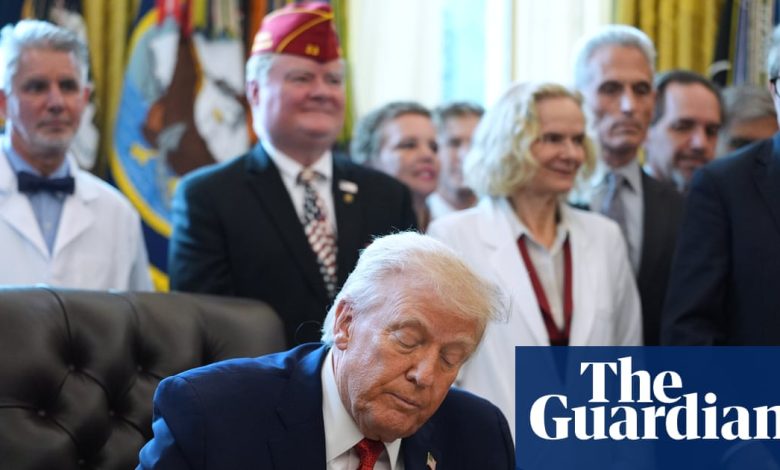
During a press event in the Oval Office, President Trump announced, “I’m pleased to announce that I will be signing an Executive Order to reschedule marijuana from a Schedule I to a Schedule III controlled substance with legitimate medical uses.” This reclassification is expected to significantly facilitate marijuana-related medical research, enabling the exploration of both its benefits and potential risks.
Impact on Medicare and Legal Framework
The executive order allows for a pilot program that reimburses Medicare patients for products containing CBD, a non-psychoactive compound derived from cannabis. Under the new classification, marijuana will shift from Schedule I—alongside substances like heroin—to Schedule III, which includes certain prescription medications such as ketamine. Notably, this change will not legalize recreational marijuana nationwide nor alter existing law enforcement protocols regarding marijuana-related arrests, as noted by senior administration officials.
Advancements in Scientific and Business Opportunities
This change places marijuana in line with certain prescription pain medications, while keeping recreational use illegal at the federal level. Furthermore, the reclassification will require a formal rule-making process through the Drug Enforcement Administration (DEA), but it is anticipated to enhance the ability to conduct scientific research and ease regulatory burdens on legal cannabis businesses, including reducing federal tax penalties and improving access to banking services.
Federal Health Research and Consumer Safety
The executive order mandates the Department of Health and Human Services (HHS) to develop research methodologies that utilize real-world evidence for studying the long-term health effects of medical marijuana and hemp-derived cannabinoid products. It also emphasizes the White House’s commitment to collaborate with Congress to widen access to safe, full-spectrum CBD products while simultaneously restricting items that may pose serious health risks due to the current absence of FDA approval. Reports indicate that one in five American adults and nearly 15% of seniors have used CBD in the past year.
Public Opinion on Marijuana Legislation
For years, marijuana’s classification as a highly dangerous substance has faced substantial criticism. The recent executive order signals a federal acknowledgment of cannabis’s recognized medical benefits and its relatively lower risk of abuse. However, it does not alter the status of recreational marijuana or the legal framework surrounding criminal justice laws.
Pew Research highlights that a majority—57%—of Americans support legalizing cannabis for both medical and recreational use, while 32% advocate for its legalization strictly for medical purposes.
Industry Reactions and Future Considerations
Paul Armentano, deputy director of the National Organization for the Reform of Marijuana Laws (NORML), commented that the executive order “validates the experiences of tens of millions of Americans and recognizes the legitimate medical utility of cannabis.” Nevertheless, he noted that while the order provides some benefits to patients, particularly veterans, it does not fully align federal marijuana policy with contemporary public sentiment, given that 24 states have already legalized its use and sale.