Trump Implements Blockade on Sanctioned Oil Tankers Entering and Exiting Venezuela

Trump Administration Implements Total Blockade Against Venezuelan Oil Tankers
In a bold move to intensify pressure on Venezuela’s authoritarian regime, President Donald Trump has ordered a “total and complete” blockade of all sanctioned oil tankers entering and leaving the country. This action signals a significant escalation in the ongoing campaign against President Nicolás Maduro.
Escalating Military Presence and Blockade Announcement
The announcement follows a series of military operations, including more than two dozen airstrikes targeting vessels in the Pacific Ocean and Caribbean Sea, resulting in numerous casualties. Recently, U.S. forces seized a tanker off the coast of Venezuela believed to be carrying approximately 2 million barrels of heavy crude oil. The Venezuelan government has labeled this seizure as “blatant theft,” further straining U.S.-Venezuelan relations.
In a post on his social media platform, Trump accused the Venezuelan government of using oil revenues to fund drug trafficking and other criminal activities. He pledged to escalate military presence in the region, stating, “Venezuela is completely surrounded by the largest armada ever assembled in the history of South America.”
Implementation Challenges and Global Market Reactions
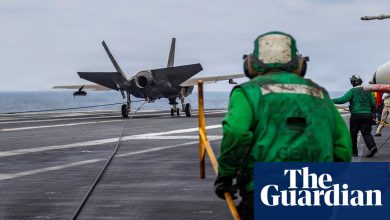
How the Trump administration will enforce this blockade remains unclear. Discussions are underway about potentially utilizing the Coast Guard for interdictions, following the recent seizure operation. Currently, thousands of troops and nearly a dozen warships, including an aircraft carrier, are stationed in the area as part of this strategic initiative.
Oil market participants have begun to react, with prices increasing in anticipation of reduced Venezuelan exports. The effective embargo established after the tanker seizure has resulted in many vessels remaining in Venezuelan waters, hesitant to venture out for fear of interception.
Consequences of Seizures on Venezuelan Oil Exports
Since the recent military actions, Venezuelan crude oil exports have dramatically declined. Compounding the issue, a cyberattack has disrupted the operations of PDVSA, the state-owned oil company. While many vessels in the region are under sanctions, other ships carrying oil from Venezuela, Iran, and Russia are still operating, complicating enforcement measures.
If the blockade remains in place for an extended period, the loss of nearly 1 million barrels per day could significantly impact global oil prices, especially as millions of barrels await offloading off the coast of China.
Trump’s Broader Military Strategy
The Trump administration’s military actions against Venezuela have intensified in recent months. On Tuesday, Pentagon officials reported conducting strikes on three vessels linked to drug trafficking, which resulted in eight fatalities. Since early September, over 20 strikes have targeted vessels near Venezuela, raising concerns about legal boundaries in warfare and the effectiveness of military strategy.
Calls from several lawmakers for the administration to release video footage of these operations have been rebuffed, citing national security interests. Despite criticisms, the administration maintains its stance that these military efforts are crucial for protecting U.S. shores from drug trafficking.
Political Implications and Future Directions
While the campaign is officially framed as a measure to combat drugs entering the U.S., recent statements by Trump’s chief of staff suggest a deeper agenda: the removal of Maduro from power. In an interview, Wiles relayed Trump’s determination to escalate military actions until Maduro capitulates.