
Texas Immigration Detention Facility Officers Accused of Assault and Sexual Abuse

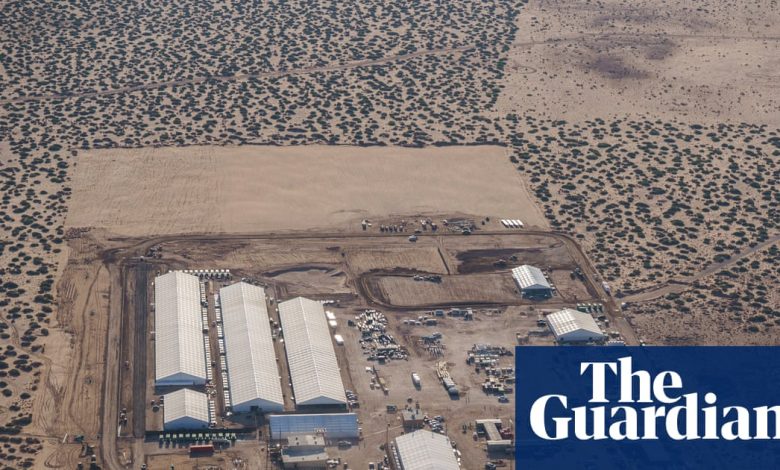
Allegations of Abuse at Fort Bliss Immigration Detention Camp Raise Concerns Over U.S. Policy
Officers at the Fort Bliss immigration detention facility in Texas are facing serious accusations of detainee mistreatment, including allegations of beatings, sexual abuse, and unlawful deportations. These claims have emerged from a coalition of civil rights organizations, which includes local and national advocates dedicated to social justice.
In a detailed 19-page letter addressed to senior officials at the Immigration and Customs Enforcement (ICE) agency and the command at Fort Bliss, the coalition asserts that officers at the Camp East Montana facility are in violation of both agency policies and constitutional rights. They are calling for the camp’s immediate closure, where over 2,700 individuals are currently held in tent-like structures.
“Given these allegations of abuse, we strongly urge an end to immigrant detention at Fort Bliss,” stated the letter, which was signed by eight organizations, including the American Civil Liberties Union (ACLU) and Human Rights Watch.
The letter, which was also sent to the Department of Homeland Security (DHS) inspector general and the Senate Armed Services Committee, cites sworn testimonies from more than 45 detainees. Some detainees have recounted being forced by masked agents to jump the U.S.-Mexico border under the threat of imprisonment if they refused.
Reports indicate that ICE officers are allegedly transporting asylum seekers from non-Mexican countries—specifically from Cuba and Guatemala—under duress to the Santa Teresa border crossing in New Mexico. Once there, these individuals claim they were met by masked officers who ordered them to cross into Mexico without due process, violating established deportation protocols.
“The masked agents sometimes resort to physical force to compel individuals to jump the wall, even when they resist,” shared an individual identified as “Eduardo,” a Cuban detainee. He alleged threats of being charged with federal crimes and deported to distant countries like Africa or El Salvador if he did not comply.
DHS Assistant Secretary Tricia McLaughlin vehemently denied the allegations, asserting that claims of inhumane conditions at ICE facilities are categorically false. “No detainees are being beaten or abused,” she stated, emphasizing that detainees have access to meals, medical care, and legal representation.
However, the coalition’s letter alleges use of excessive force within the facility, invoking harrowing accounts of sexual violence employed as a means of discipline. An individual named “Isaac” reported severe abuse after refusing to sign a voluntary deportation form, including head injuries and sexual assault at the hands of guards.
Another detainee identified as “Samuel” detailed an incident where he was brutally assaulted for turning off an overhead light, resulting in physical trauma. The account included claims of medical neglect, excessive force, and inadequate living conditions that violate basic human rights.
Reports from detainees describe conditions where plumbing failures lead to sewage backing up into sleeping quarters, exposing individuals to unsanitary environments. Furthermore, the quality of food has been described as inadequate and often spoiled, leading to significant health issues among detainees.
McLaughlin contends that the conditions presented by advocacy groups are misrepresentations. “No lawbreakers in the history of human civilization have been treated better than illegal aliens in the United States,” she remarked.
In the face of these allegations, Eunice Hyunhye Cho, senior counsel at the ACLU National Prison Project, emphasized the need for external oversight at the facility. She highlighted that the lack of transparency and access to the outside world has contributed to reported abuses.
“Placing thousands of individuals in tent camps at a military base without sufficient staff is a recipe for disaster,” said Cho. “While shocking, these reports unfortunately confirm what many predicted.”
Local leaders and migrant-rights advocates continue to condemn the treatment of detainees, raising alarms about potential human rights violations amid troubling conditions. Texas Congresswoman Veronica Escobar, who represents the El Paso area, has demanded immediate action and transparency from the DHS, labeling the facility a “public health hazard.”