

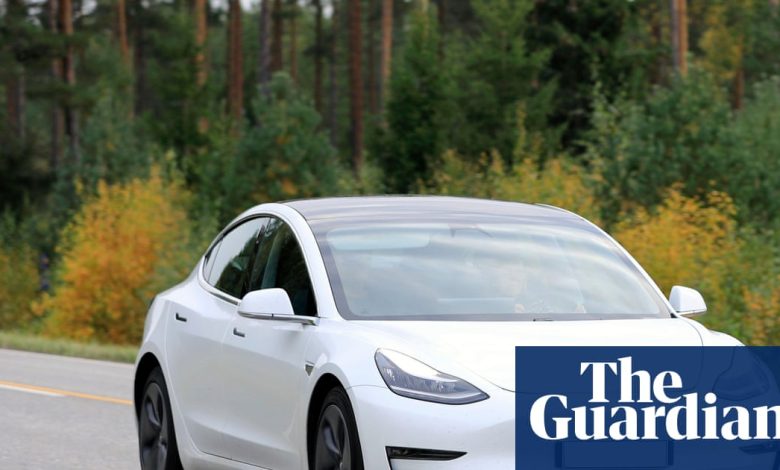
Tesla Launches Lower-Priced Model 3 in Europe Amid Controversies and Declining Sales
Tesla has introduced a more affordable version of its Model 3 in Europe, aiming to boost sales in light of recent challenges, including backlash against CEO Elon Musk’s ties to Donald Trump and declining demand for electric vehicles (EVs).
Musk contends that this budget-friendly option, which debuted in the U.S. last October, will stimulate demand by appealing to a broader audience. The new Model 3 Standard is priced at €37,970 (approximately $40,000) in Germany, 330,056 Norwegian krone (around $29,000), and 449,990 Swedish krona (about $32,000). This launch follows the introduction of a lower-priced Model Y SUV in both Europe and the U.S., which has been Tesla’s best-selling model.
While the new Model 3 and Model Y maintain impressive driving ranges exceeding 300 miles (480 km), they do sacrifice some premium finishes and features found in their higher-priced counterparts. The initiative comes as Tesla faces mounting competition from Chinese rival BYD, which recently outsold the American electric vehicle manufacturer in Europe for the first time.
Sales in the EU have been affected not only by fierce competition but also by public discontent over Musk’s political affiliations. His support for Trump’s election campaign and his brief tenure in the Trump administration have drawn significant criticism from buyers. In his role leading the “Department of Government Efficiency,” Musk implemented substantial job cuts but departed in May after a fallout over a controversial tax and spending bill.
Musk’s political interventions have further alienated some consumers, most notably through controversial actions such as an alleged Nazi salute at a Trump rally and expressions of support for Germany’s far-right AfD party. He has also been criticized for making accusations against UK politicians regarding a grooming gang scandal.
Recent fiscal policies, including new taxes on electric vehicles, threaten to dampen demand in the UK. According to the Society of Motor Manufacturers and Traders (SMMT), the growth rate of electric car sales in the UK reached its slowest pace in two years, registering only a 3.6% increase in November.
Mike Hawes, the SMMT’s chief executive, remarked, “This should be seen as a wake-up call that a sustained increase in demand for EVs cannot be taken for granted. We should be taking every opportunity to encourage drivers to make the switch, not punishing them for doing so.”
Additionally, the new pay-per-mile road tax set to be implemented in April 2028 will impose a charge of 3p for every mile driven in electric vehicles, potentially costing drivers an average of £250 annually.